When litigation becomes reasonably anticipated, your obligation to preserve relevant evidence begins. Not when the complaint is filed. Not when discovery opens. When you reasonably anticipate it.
That gap between anticipation and filing is where evidence gets lost, and where sanctions later come from.
A litigation hold letter is how you close that gap. Send it to the right people, at the right time, and you've created a record showing you took preservation seriously. Miss it, and you're explaining to a judge why relevant emails were auto-deleted six weeks after the dispute started.
This guide covers exactly what a litigation hold letter needs to say, who should receive it, and when to send it. There's a template at the bottom you can adapt for any matter.
What Is a Litigation Hold Letter?
A litigation hold letter (also called a preservation notice or legal hold notice) is a written instruction telling specific individuals and departments to preserve any information that may be relevant to anticipated or pending litigation.
It suspends normal document retention policies for those recipients. Auto-delete rules, scheduled purges, email archiving limits: all of it stops for the scope of the hold.
The letter creates a record that you issued the hold. That record matters. In federal court, FRCP Rule 37(e) governs sanctions for lost electronically stored information (ESI), and the central question is always whether preservation obligations were taken seriously. A documented hold letter is your first line of defense.
When to Send It
The standard is "reasonable anticipation of litigation." Courts interpret this broadly. You don't need a filed complaint. You don't need a formal demand letter, though receiving one is certainly sufficient.
Common triggering events include:
- Receipt of a demand letter or threat of litigation
- Termination of an employee who has already raised complaints or threatened legal action
- A workplace incident with obvious liability implications
- Notice of a regulatory investigation or agency charge (EEOC, OSHA, DOL)
- A significant contract dispute or breach allegation
- Internal reports of harassment, discrimination, or misconduct
When in doubt, err toward sending the hold earlier rather than later. The cost of sending a hold notice when litigation doesn't materialize is low. The cost of failing to send one when it does is substantially higher.
The Clock Starts Before You Know It
Courts have found that litigation was "reasonably anticipated" before the company's own lawyers were even aware of it. A supervisor who witnesses a serious accident and knows the injured employee has retained counsel. An HR director who receives a formal written complaint. These moments can be sufficient to trigger the obligation, even if no attorney has been consulted yet.
The safest approach: build a process where potential triggering events get escalated quickly, and hold letters go out as soon as any doubt exists.
Who Should Receive the Hold Letter
This is where many firms go wrong. The hold letter goes to the client's key personnel, not just to general counsel.
Specifically, you need to identify every person who may have relevant documents or electronically stored information, including:
- Key custodians (the individuals directly involved in the events at issue)
- Their supervisors and direct reports, if their communications are likely relevant
- IT personnel responsible for email systems, file servers, and backup infrastructure
- Any department that may have processed or handled documents related to the matter
For a wrongful termination matter, that typically means the terminated employee's manager, HR, anyone involved in the performance review or termination decision, and payroll. For a contract dispute, it means everyone who negotiated, executed, or performed under the contract.
Cast the net broadly at first. You can narrow scope later. You cannot recover deleted emails.
Don't Forget the Systems Side
The hold letter to human custodians is only half the picture. IT needs separate, direct instructions to disable auto-deletion, pause scheduled purges, and identify relevant backup media. If your client's email system purges items older than 30 days from the Deleted Items folder, that needs to stop now.
Get confirmation in writing. A reply email saying "Understood, hold implemented" is better than a phone call you can't prove happened.
What a Litigation Hold Letter Must Include
A hold letter doesn't need to be long. It needs to be complete. At minimum, it should contain:
1. A clear statement that litigation is anticipated or pending. Don't bury the lede. Open with why you're sending this.
2. The scope of the hold. What subject matter does it cover? What time period? Recipients need to know what to preserve.
3. A description of covered materials. Email, text messages, voicemails, documents, spreadsheets, calendar entries, instant messages, handwritten notes, physical records. Be specific and inclusive.
4. A suspension of normal retention policies. Explicitly state that the recipient must override any automatic deletion, archiving, or purging processes.
5. Instructions for what to do. Don't just tell them to preserve. Tell them how: keep emails in their existing folders, don't delete files, notify IT, report any accidental loss immediately.
6. A point of contact. Who do they call if they have questions or if something goes wrong?
7. An acknowledgment request. Ask recipients to confirm receipt and compliance, in writing. That confirmation becomes part of your preservation record.
Litigation Hold Letter Template
Below is a template you can adapt for any civil matter. Adjust the matter description, custodian list, and specific document categories to fit your case.
LITIGATION HOLD NOTICE
To: [Custodian Name / Department] From: [Attorney Name], [Firm Name] Date: [Date] Re: Preservation of Documents and Electronically Stored Information -- [Matter Name/Description]
We are writing to notify you that [Client Name] is involved in, or reasonably anticipates, litigation arising from [brief description of the dispute or incident]. As a result, [Client Name] has a legal obligation to preserve all documents and electronically stored information (ESI) that may be relevant to this matter.
You must preserve all materials related to [matter description], covering the period from [start date] to the present.
This obligation applies regardless of where the information is stored. Covered materials include, but are not limited to:
- Email messages (sent, received, and drafts), including attachments
- Text messages, instant messages, and any other electronic communications
- Documents, spreadsheets, presentations, and other files (whether stored locally, on a shared network, or in cloud services)
- Calendar entries, meeting invitations, and notes
- Voicemails and recorded communications
- Physical documents, notes, and correspondence
Suspend all routine deletion, archiving, and purging processes for materials covered by this hold. This includes any automatic deletion rules in your email client, scheduled IT purges, or any other process that would result in the deletion or loss of potentially relevant information.
Do not delete, destroy, overwrite, alter, or otherwise modify any covered materials. If you become aware of any accidental or inadvertent loss of covered information, notify [contact name] immediately at [phone/email].
Please confirm receipt of this notice and your compliance with it by signing and returning the acknowledgment below, or by replying to this letter in writing.
If you have any questions about the scope of this hold or your obligations under it, contact [contact name] at [phone/email].
Acknowledgment of Litigation Hold
I confirm that I have received and read this litigation hold notice. I understand my obligation to preserve the materials described above and have taken steps to comply.
Signature: _________________________ Date: _____________
Name: _________________________
Title: _________________________
After You Send It
The hold letter is not a one-time event. Document it and follow up.
Keep copies of every hold letter issued, every acknowledgment received, and every IT confirmation. If the matter extends for months, reissue the hold periodically to remind custodians and to capture anyone new who joined the matter.
Check in with IT to confirm that preservation measures are actually in place, not just promised. Ask whether any backup media has been recycled, any hardware disposed of, or any cloud data purged since the hold was issued.
If you learn of any gap in preservation, document it immediately and assess whether notification to opposing counsel or the court is required. Getting ahead of a disclosure is almost always better than having it surface later.
Tracking Custodian Compliance
For matters with many custodians, a simple spreadsheet goes a long way. Log who received the hold, when, whether you received acknowledgment, and any follow-up needed. Courts have found inadequate hold processes even when letters were sent, because the attorney couldn't demonstrate that custodians actually complied.
If a custodian doesn't respond within a few days, follow up directly. An unanswered hold notice is a gap in your record. Close it.
Common Mistakes to Avoid
Waiting too long. The most common error. By the time a complaint is filed, weeks may have passed since the triggering event. In that time, auto-deletion policies can wipe out exactly what you need.
Sending it only to legal. The hold has to reach the people who actually have the documents. General counsel forwarding it internally is not enough unless you can verify it reached every relevant custodian.
Vague scope. A hold letter that says "preserve anything related to the Smith matter" leaves too much room for interpretation. Specify the time period, the subject matter, and the types of documents covered.
No IT involvement. Human custodians can follow instructions to stop manually deleting emails. They cannot stop automated system processes. IT has to be looped in separately and explicitly.
No follow-up. A hold letter sent and forgotten is only marginally better than no hold letter at all. The point is to actually preserve the evidence, not just to check a box.
Organizing What You Preserve
Sending the hold is the beginning, not the end. Once emails and documents are preserved, someone has to organize them. That means reviewing email threads in context, sorting by date and custodian, and identifying the communications that actually matter.
Tools that let you visualize email chains chronologically save significant time at this stage. When you can see a dispute unfold across a timeline rather than searching through individual messages, patterns emerge faster and gaps become obvious.
ThreadLine was built for exactly this step. It converts preserved email collections into a clean, searchable timeline so attorneys and paralegals can review them without wading through a folder full of individual messages. If you're handling email evidence on a regular basis, it's worth a look: threadline.app.
Need help organizing email evidence once the hold is in place? ThreadLine turns email collections into clear, chronological timelines. Built for small law firms. No enterprise contract required.
FAQ
When should a litigation hold letter be sent?
Send a litigation hold letter as soon as litigation is reasonably anticipated, not only after a complaint or subpoena arrives.
Who should receive a legal hold notice?
Send the notice to custodians who may control relevant records, plus IT, HR, managers, vendors, or other system owners who can preserve email, chat, documents, and backups.
Should a litigation hold cover email metadata?
Yes. The hold should instruct recipients not to delete, forward, alter, export casually, or otherwise damage email metadata and attachments.
Related reading
- Email chain of custody
- What is a custodian in eDiscovery?
- How to preserve email evidence
- Document employee misconduct email
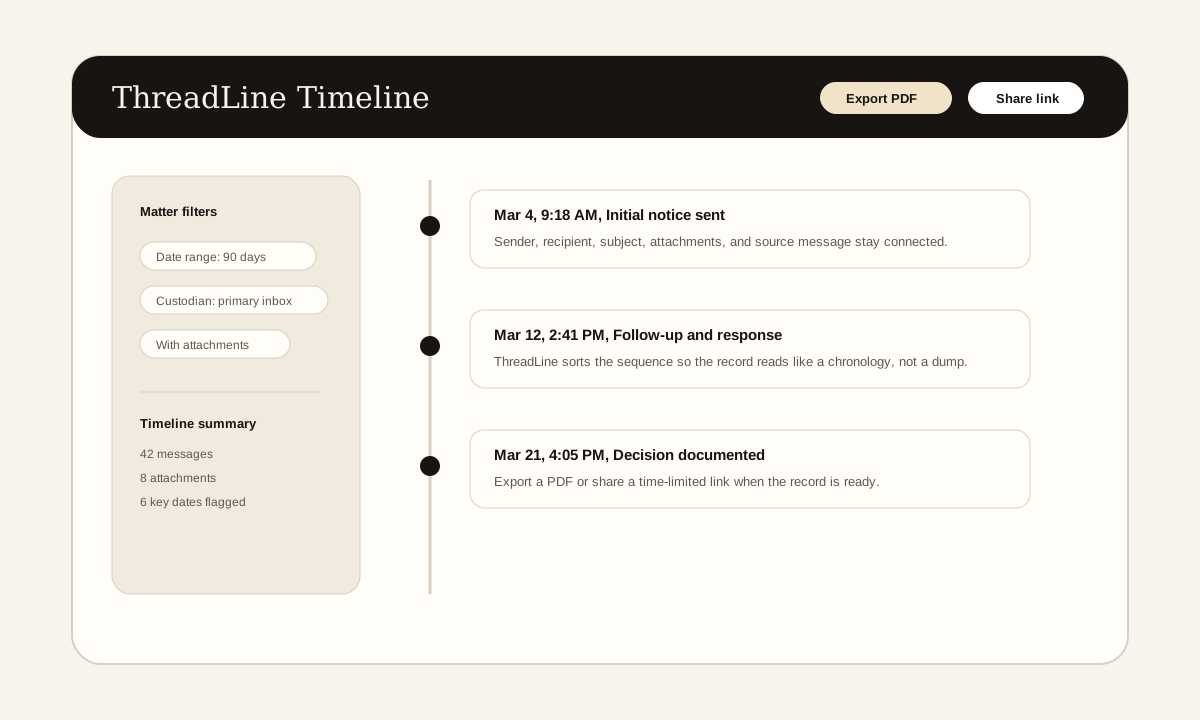
The screenshot above is a product example of the timeline view these articles describe: messages in order, source context preserved, and export or sharing controls available when the record is ready.
Need a clean email record without enterprise pricing?
ThreadLine gives small firms a court-ready email timeline in minutes. No Relativity, no per-gigabyte fees, just a clear, chronological record you can share or export. First timeline is free.
Working an active case? A $49 Case Pass covers 90 days with no subscription.
Need to organize the record first? Get the free dispute documentation checklist.
← Back to all posts