What an Email Subpoena Actually Demands
An email subpoena is a formal legal command to produce email records. It can arrive as a subpoena duces tecum in civil litigation, a grand jury subpoena in a criminal investigation, an administrative subpoena from a regulatory agency, or a records request from a government body with subpoena authority.
Regardless of form, the core demand is the same: produce specified email records by a specified date or face legal consequences. Unlike a discovery request between parties, a subpoena can reach non-parties, including businesses, email providers, and individuals who are not directly involved in the underlying dispute.
The obligation is real and enforceable. Ignoring an email subpoena is not an option. But responding without a clear process is how organizations create new legal exposure on top of whatever brought the subpoena in the first place.
This guide walks through the response process step by step -- what to review immediately, what grounds for objection exist, how to collect and produce responsive email, and how to document everything so the response holds up to scrutiny.
Step 1: Read the Subpoena Carefully Before Doing Anything Else
The first step is straightforward but often rushed: read the document carefully.
An email subpoena has specific components you need to understand before taking any action:
The scope of the request. What email records are being demanded? The subpoena should specify custodians (whose email), date ranges, subject matter, or keyword parameters. Some subpoenas are narrowly targeted; others are drafted broadly enough that the first task is figuring out what they actually encompass.
The response deadline. When must production occur? Some subpoenas allow weeks for response. Others demand records within days. The deadline is not a suggestion, and missing it without a valid objection or agreement from the issuing party can result in contempt sanctions.
The format for production. Some subpoenas specify how records must be produced -- native format with metadata, printed copies, a specific file structure. If the subpoena does not specify, you have more flexibility, but producing in a format that strips metadata may create problems later if authenticity is challenged.
The issuing court or authority. Who issued the subpoena? A federal court subpoena, a state court subpoena, and an administrative subpoena from a federal agency each carry different procedural rules and different leverage for objections.
Whether you are the target or a third party. If the subpoena is directed at a party to the underlying litigation, the rules of that litigation govern. If it is directed at a non-party such as a business holding email records for a former employee, the Federal Rules provide specific protections, including the right to object on grounds of undue burden.
Step 2: Implement a Litigation Hold Immediately
The moment you receive an email subpoena, your legal duty to preserve potentially responsive records begins. If it has not already, a litigation hold must go into effect immediately.
A litigation hold suspends normal email deletion and retention policies for anyone whose email may be responsive to the subpoena. This means notifying custodians, disabling auto-delete settings, and taking steps to prevent any covered email from being permanently removed.
Failure to preserve after receiving a subpoena is spoliation. Courts treat spoliation of email evidence seriously, and the consequences go beyond the underlying dispute. An adverse inference instruction, sanctions, or case-dispositive penalties are all on the table for parties who destroy records after receiving notice of a legal obligation to preserve.
The hold should be documented in writing. If a custodian later claims they did not know to preserve certain records, you need evidence that proper notice was given. Written litigation hold notices sent at the time of the subpoena are the standard.
Step 3: Assess the Grounds for Objection
Not every email subpoena must be answered as written. You have the right to object, and in some cases you have strong grounds to do so. Common objection bases include:
Scope and proportionality. A subpoena demanding five years of email records for twelve custodians in a contract dispute worth $50,000 is arguably disproportionate. Under FRCP 45(d)(3), a court must quash or modify a subpoena that imposes undue burden or expense. Proportionality is an accepted argument, but you need to raise it promptly through proper motion practice.
Relevance. If the records demanded have no apparent connection to the claims at issue, a relevance objection is appropriate. Courts have limited broadly drafted subpoenas that appear designed to fish for tangentially related material rather than obtain genuinely relevant evidence.
Privilege. Attorney-client communications, attorney work product, and other privileged materials are not subject to production even under subpoena. If responsive email includes privileged content, you produce a privilege log identifying the withheld records and the basis for withholding them. You do not simply produce privileged email because a subpoena asks for it.
Third-party privacy rights. A subpoena directed at a business may call for email records involving individuals who are not parties to the litigation and have not consented to disclosure. Depending on the circumstances and applicable law, privacy interests may support objection or require notification to affected individuals before production.
Procedural defects. Subpoenas must comply with procedural requirements: proper service, geographic limits on compliance, and notice requirements for non-parties. A subpoena that was not properly served or that demands compliance beyond geographic limits may be subject to a motion to quash on procedural grounds.
Objections must be raised promptly. Under FRCP 45, objections to a subpoena must be served before the compliance date or within 14 days of service, whichever is earlier. Waiting until the deadline has passed to raise objections you had the opportunity to make earlier weakens your position significantly.
Step 4: Collect Responsive Email Systematically
Once you have reviewed the subpoena and addressed any objections, collection begins. How you collect matters as much as what you collect.
Define the scope precisely. Based on the subpoena's parameters, identify which email accounts are potentially responsive, the date range that applies, and any keyword or subject matter limitations. Document these parameters before collection begins so you can demonstrate that your approach was reasonable and systematic.
Preserve in native format. Collect email records in their native format, with metadata intact. Native email preserves timestamps, routing headers, sender and recipient information, and other data that may be relevant to authenticity or chain of custody. Exporting emails as printed pages or PDFs strips this information and may create complications if authenticity is later challenged.
Build a chronological record. For review purposes and for production, a chronological view of the email record is far more useful than a folder of individual messages. A timeline view allows reviewers to understand the context of individual messages, identify related threads, and spot any gaps that may require explanation.
This is where email timeline tools become practical. Rather than manually sorting exported email into a chronological structure, software designed for this purpose generates a structured timeline automatically. Reviewers can work through the record efficiently, apply privilege and responsiveness determinations, and produce a coherent result.
Document your collection process. Keep records of when collection occurred, whose accounts were searched, what parameters were applied, and who conducted the collection. Chain of custody documentation for the collection process itself protects you from later arguments that the production was incomplete or tampered with.
Step 5: Review Before Producing
Every responsive email should be reviewed for privilege before production. This is not optional, even under time pressure.
A privilege review identifies attorney-client communications and work product that must be withheld regardless of responsiveness. It also flags confidential business information, trade secrets, or third-party personal data that may require special handling.
The result of privilege review is two things: a production set of non-privileged, responsive records, and a privilege log that identifies withheld documents, the custodian, date, general subject matter, and the privilege basis. Courts expect privilege logs to be specific enough to allow the requesting party to evaluate whether the privilege claim is legitimate.
If time pressure is severe, consider whether a claw-back agreement under FRCP 502(d) is appropriate. A 502(d) order protects against inadvertent waiver if privileged documents slip through review. This is standard practice in large-volume productions and increasingly common in subpoena responses as well.
Step 6: Produce and Confirm
Production should be made in the specified format, by the required deadline, with a cover letter or transmittal document that identifies the production, confirms compliance with the subpoena, and notes any withholdings by category.
If you are producing a privilege log along with the production, include it at the same time. Do not produce responsive documents and promise to send the log later without a specific agreed date.
After production, confirm receipt. Keep a copy of the production and the cover transmittal. These records matter if a dispute arises later about whether production was timely or complete.
Common Mistakes That Create Exposure
Attorneys and HR professionals responding to email subpoenas routinely make mistakes that turn a manageable production into an expensive problem:
Deleting email after service. Even inadvertent deletion of records after a subpoena arrives can be treated as spoliation. Litigation holds must be immediate and comprehensive.
Over-producing. Sending more than what was requested, particularly if the excess includes privileged material, can waive privilege and create new disclosure obligations. A systematic review and scoped production is the protection.
Under-producing. Missing responsive records because searches were not comprehensive is a common and costly error. Document your search parameters and confirm that all custodians identified in the subpoena were actually searched.
Missing the deadline without a formal extension. If you need more time, get an agreed extension in writing from the issuing party or file a motion for extension before the deadline. Letting the deadline pass without either creates contempt exposure.
Producing without metadata. Printing emails as PDFs and delivering paper copies may technically produce the content but strips authenticity-supporting metadata. If format is not specified, native production with metadata is defensible; printed copies without metadata may not be.
Organizing the Email Record for Production
One of the practical challenges in any email subpoena response is turning a raw email archive into an organized, navigable production. A jumble of exported files is technically a production, but it creates friction with the requesting party and makes review harder on your side as well.
A chronological timeline of the email record serves both functions. Reviewers can move through the record in sequence, understand context, and make privilege and responsiveness determinations efficiently. The same structure transfers well to production, giving the requesting party a coherent record they can actually use.
ThreadLine connects directly to IMAP-compatible email accounts, including Microsoft 365, Outlook, and Gmail, and generates a chronological timeline automatically. You set the custodians, date range, and any keyword filters, and the tool handles the organization. The timeline can be reviewed internally, shared via a secure link with counsel or the requesting party, or exported as a court-ready PDF.
For small law firms and HR departments handling subpoena responses without a dedicated litigation support team, this kind of organized output makes the difference between a response you can stand behind and one that invites follow-up questions.
If you have an email subpoena to respond to and need to get the relevant records organized quickly, start your first free timeline at threadline.app. No credit card required.
FAQ
Can a subpoena request emails?
Yes. A subpoena can request emails, but the responding party should review scope, objections, privilege, burden, and production format before producing records.
What is the first step after receiving an email subpoena?
Preserve potentially responsive emails immediately, then calendar deadlines, identify custodians, review objections, and define the collection method.
Should subpoenaed emails be produced as PDFs?
PDFs can be useful for review, but production format should preserve necessary metadata and attachments. Native or near-native exports may be safer when authenticity or timing matters.
Related reading
- Litigation hold letter template
- Email metadata in litigation
- Email evidence production mistakes
- Court-ready email exhibits
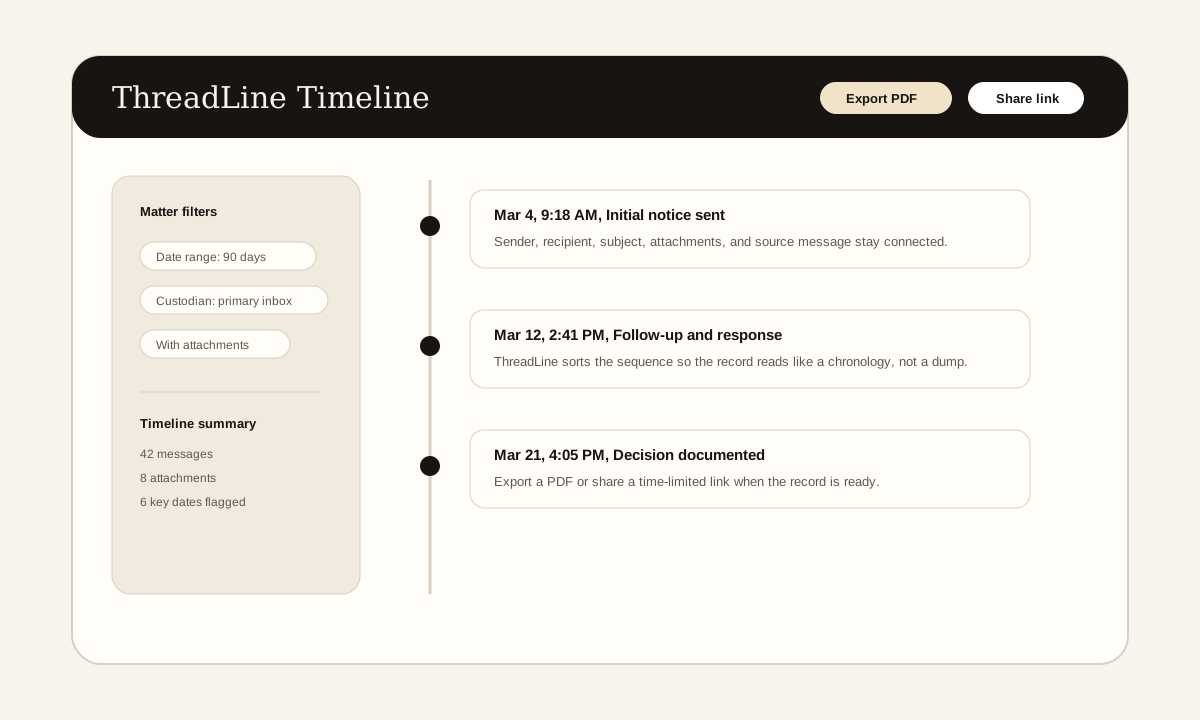
The screenshot above is a product example of the timeline view these articles describe: messages in order, source context preserved, and export or sharing controls available when the record is ready.
Ready to organize the email record for this matter?
ThreadLine turns scattered emails into a clean, chronological timeline your HR team or legal counsel can actually use. Audit-ready, shareable, and exportable in minutes. First timeline is free.
Working an active case? A $49 Case Pass covers 90 days with no subscription.
Need to organize the record first? Get the free dispute documentation checklist.
← Back to all posts